It has now been more than a week since the Islamic Republic of Iran shuttered internet access for 92 million people nationwide in response to a growing revolution. Based on the limited videos and photos that have managed to reach the outside world, the death toll of the regime’s crackdown is believed to be well into the thousands, with some sources reporting more than 12,000 deaths. The scale of killing is bone-chilling and may mark the largest massacre in Iran’s contemporary history. More than 18,000 demonstrators have been detained as of Tuesday, according to the Human Rights Activists News Agency (HRANA), a U.S.-based human rights organization. People inside Iran are calling for help, and I, like all Iranians forced into exile, remain deeply worried about the safety of my family and friends inside Iran.
But even as I and other diaspora Iranians are kept in the dark, I cannot help but look ahead to the future. If the regime maintains its grasp on power despite the overwhelming show of public dissent, we need to raise the alarm now over the conditions that will be faced by those who will be arrested, scapegoated, and imprisoned as part of the mullahs’ campaign of repression.
I know all too well what awaits many of the protesters now being detained. I was arrested three times in Iran due to my student activism against the Islamic regime’s draconian and repressive laws. During my first two arrests, amid the Green Movement in 2010 and 2011, I was held in solitary confinement in Tehran’s Evin Prison. My cell was barely large enough to stretch my legs. The floor was bare cement, covered only by a thin carpet, and I slept on military-style blankets—one beneath me, one to cover me, and, if I was lucky, a third rolled up as a pillow. The light was never turned off. There was no toilet inside the cell; every trip to the bathroom required a blindfold and permission from a guard, which could be denied as punishment. As popular unrest continued and the number of arrests grew, even solitary cells were no longer solitary, with multiple detainees sometimes crammed into spaces designed for one. Interrogations became the only way out of the cell, both a relief and another form of torment.
What’s likely to follow for many detainees from the recent crackdowns is horrifying: overcrowded wards, the denial of medical care, coerced confessions, and mock trials in which verdicts are often decided before hearings even begin. This is the machinery now being prepared for thousands of Iranians swept up in the regime’s latest crackdown.
In 2012, my life was about to begin anew: After being banned from higher education in my own country because of my student activism, I finally secured admission to a Ph.D. program in the United States. My suitcases were packed and my student visa appointment at the embassy was confirmed. But two days before departure, I was arrested again. The shock of being thrown back into Evin Prison was overwhelming. Yet when I entered the women’s ward, a kind face welcomed me, listened to my story, and treated me as if I were her daughter: Fariba Kamalabadi, a psychologist and mother of three. She had served on an informal ad hoc committee responsible for tending to the spiritual and social needs of the Bahá’ís of Iran, and was imprisoned solely for her faith. I was released on bail after serving five months of a three-year sentence. But after all these years, Fariba, now 63, is still behind bars. She endured an unjust decade-long sentence, was released in 2017, and then sentenced to another decade in prison in 2022.
Little did I realize at the time of my release that some of my cellmates would be moved to Qarchak, a prison that would make Evin look almost benign in comparison, in 2016 and again last year. After an Israeli missile that struck Evin Prison in June forced the partial evacuation of detainees, female political prisoners, including women from religious minority groups, were transferred to Qarchak—a former livestock warehouse near Tehran that the regime crudely converted into a detention center for criminal offenders in 2010. Overcrowding, unsanitary conditions, and fights between inmates over access to clean water and bathroom facilities are common, as are brutal beatings by guards. In early October, Iranian authorities transferred prisoners of conscience back to Evin. I welcomed the decision, but it by no means excuses the months these inmates spent in such inhumane conditions.
Fariba’s daughter, Alhan Taefi, recently told me what life was like in Qarchak prison. About 70 women were crammed into a 140-square-meter “quarantine” ward, stacked in triple bunk beds, and given barely enough room to move. Fariba’s arms and legs often went numb from poor circulation because the limited space forced her, like her fellow inmates, to spend most of her time in bed. The windows could not be opened, and there was no ventilation. Disease spread quickly; when one prisoner fell ill, the entire ward soon suffered. Three women died in September after being denied medical care. Two toilets and three showers served 70 women. Once, one of the showers was unusable for weeks because of a wasp infestation, which the prisoners themselves had to clear. In the summer heat, many avoided even the tiny outdoor yard. Frequent water and electricity cuts added to their misery.
Yet there are no signs that the authorities are considering closing Qarchak. Many criminal detainees continue to face brutal conditions at the prison and there is no guarantee that Qarchak won’t again be used to hold women prisoners of conscience, particularly as the Islamic Republic responds to the growing revolution with a wave of arrests.
Reopening the infamous prison to protesters and other political prisoners would be part of a wider campaign to break anyone who dares to speak or simply believe differently. Notably, an unprecedented two-thirds of Bahá’í prisoners from across Iran are women. As members of Iran’s largest non-Muslim religious minority, Bahá’ís have been subject to persecution since the mid-19th century due to the faith’s founding after Islam and its social principles and practices, such as the equality of women and men, that diverge from the Islamic Republic’s theocratic vision.
The scale of this persecution is staggering. According to HRANA, over the past five years alone, at least 284 Bahá’ís have been arrested, 270 summoned to security and judicial bodies, and 388 sentenced to a combined 1,495 years in prison. More than 400 homes have been raided. HRANA reports that 72 percent of all recorded human rights violations against religious minorities in Iran during the past decade have targeted Bahá’ís —a community of only about 300,000 people.
Yet even as the regime tightens its grip, it cannot extinguish the spirit of solidarity that has grown among Iranians. I saw it firsthand in Evin prison, where Bahá’í, Christian, Muslim, and atheist women became each other’s closest allies. I still remember a Bahá’í prisoner, preparing iftar during Ramadan—the Muslim fasting month—for the entire ward, even though only one or two women were fasting. Acts of kindness like this have broken down the walls that the regime has worked so hard to build between us. That same spirit lives on in the streets of Iran today.
The “women, life, freedom” movement continues to inspire young Iranians who demand dignity, equality, and justice. Fariba’s story is not just about one prisoner or one community. It is about generations refusing to accept silence and fear as their destiny. Now more than ever, we need our stories told.
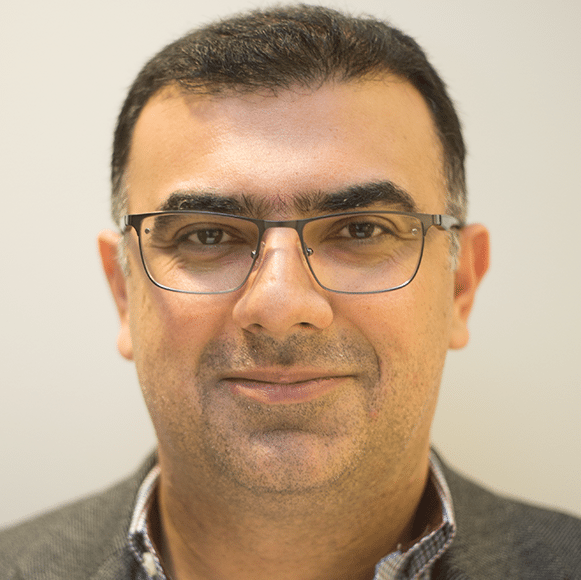
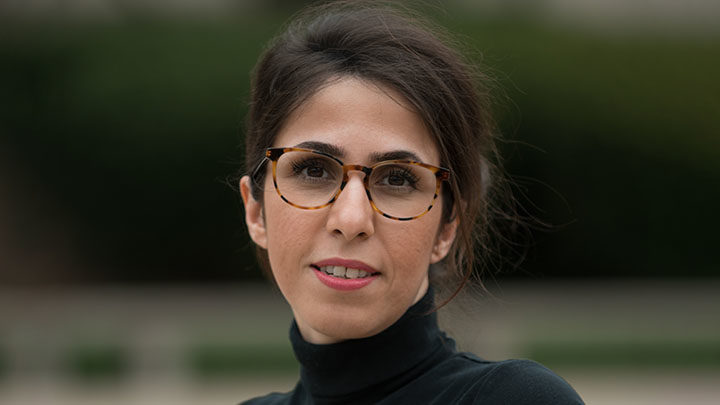
Dr. Mitra Aliabouzar is a research assistant professor of mechanical engineering and radiology at the University of Michigan, Ann Arbor. As a student in Iran, she helped organize demonstrations against the Islamic Republic. She was jailed three times and served five months in prison.
Inside Iran’s Prison Wards - Mitra Aliabouzar - The Dispatch